
Livingston Busted Mugshots
A booking record starts the moment someone is received at the Livingston County Jail. The arresting department writes up the incident. The jail then adds fingerprints, identification details, and bond information. The court handles the case outcome later, in a separate system. So these records connect, but they are not one document. The Sheriff lists booking, bonds, records, and release as jail functions, and the state retention schedule keeps booking cards and mug shots in an inmate's jail file. A photo can sit in an agency file even when the county posts nothing for public browsing.
Watch the custody label first. Just-booked means the person reached intake. In-custody means they are still there. A released person may be gone while the record stays on file, and anyone sentenced to state prison moves into the MDOC system instead. For current status, the county's Jail page is the dependable local starting point. Beware of lookalike pages with similar names.
Those jail-system figures come from the Sheriff's About Us page. They measure overall operations. They do not count public photographs. They also say nothing about whether any one person is still in custody.
Note: A booking photo records a point in the intake process, while the court file is the source for a later disposition.
Livingston Booking Record Fields
A narrow request works better than a broad one. Ask for one person, not a whole date range. Include the full name and an approximate booking date. Add the arresting agency, plus a booking or case number if you have one. The fields below are items worth asking the agency to verify. Some may be redacted. A juvenile restriction, a sealed record, or another legal limit can also make an item unavailable.
| Field | What it can show |
|---|---|
| Legal name and aliases | Identity as recorded by the booking agency. |
| Booking number and time | The jail intake event, which can differ from the arrest time. |
| Arresting agency | The department that may hold the underlying incident report. |
| Charges as booked | Initial charges used for intake and bond. |
| Bond and court date | Pretrial information that can later change through the court. |
| Photo and descriptors | An intake identification image and releasable identifying details, if retained. |
| Release or transfer event | A departure from county custody, not necessarily a case resolution. |
The record can also list a hold or detainer, the next court date, and a state or federal identifier. A hold is simply a custody basis. If the person has a court number, track the case in MiCourt. Do not expect the booking entry to update after every hearing. That habit avoids a common mistake: a historic booking can linger in an agency file long after the person's release or after the charge itself has changed.
- Booking
- Jail intake, identification, and initial custody processing.
- Arraignment
- An early court appearance where the case and bond process continue.
- Bond
- A court-set condition that can allow release while a case remains pending.
- Disposition
- The later court result, such as dismissal, plea, acquittal, or sentence.
Requesting Livingston Booking Photos
No public photo roster exists here. So the direct route to a nonexempt booking image is a request to the right custodian. The official County FOIA page carries the procedures, forms, cost worksheet, appeal material, and a link to the online portal. Central Records handles the Sheriff's FOIA and report questions too. One office does not hold everything. Ask whether the Sheriff, the jail, or the arresting city department has the item first.
- Record the full name, approximate intake date, arresting agency, and any booking or case number.
- Use the county's FOIA request portal for a county-jail record, and identify the exact booking photograph or intake record requested.
- Ask the custodian to provide a segregable public portion and state the legal basis for any withheld or redacted portion.
- Keep the response date and follow the named court or agency path if the record belongs to another custodian.
Michigan FOIA usually requires a response within five business days. One extension of up to ten more is possible. A response might grant the request, deny it, grant it in part, ask for clarification, or supply a lawful estimate. None of that guarantees a photo on that timeline. Fees can cover actual and incremental costs for search, review, redaction, copying, delivery, and sometimes a deposit. No Livingston-specific booking-photo fee is published. Ask for an itemized estimate rather than treating a jail charge as a photo fee. When you have a precise name and an approximate booking date, the county's FOIA portal is the route to use.
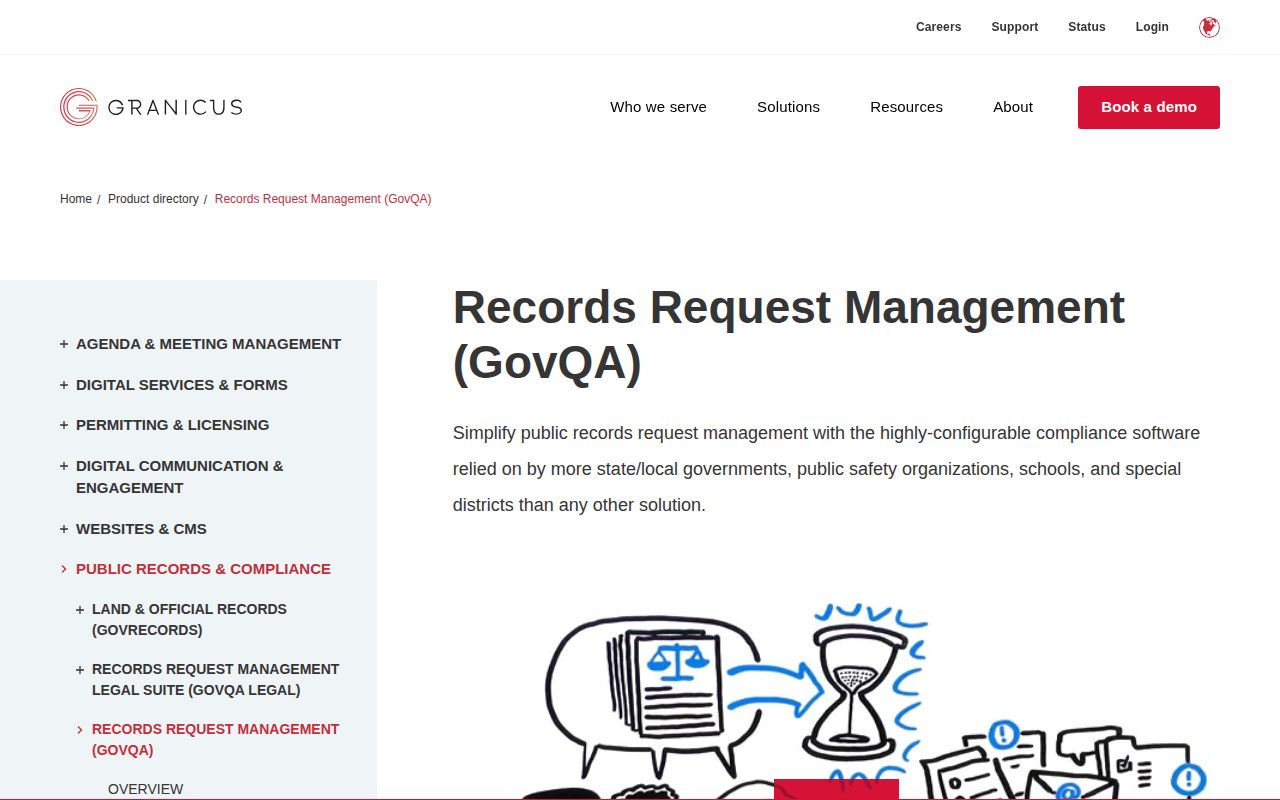
The portal suits focused requests. It does not replace the jail's custody line or the court register for anything that happens later in a case.
Note: The jail's booking fee is charged to an inmate account and is separate from any FOIA estimate for records.
Livingston Bond and Release Timing
Booking and release answer two different questions. The Jail's Bail page explains that certain misdemeanors carry preset bonds, while a judge sets felony bonds at arraignment. Cash and credit both work through the published process. The county notes a 7 percent AllPaid processing fee on the credit route. It publishes no fixed window between payment, a court order, and the actual walk out the door.
Do not guess that interval from a post, a court entry, or a third-party site. Call the jail for an individual release status. Keep custody separate from the pending case. A bond posting does not mean the person has left the facility yet. The court register remains the source for the later case record.
Note: Felony bond is set at arraignment, while release timing depends on the county's operational and court processes.
Busted Records: Livingston Retention
How long a file survives and how long you can see it online are two different things. Under Michigan General Schedule #11, booking and control-center logs stay on file through the end of the calendar year plus seven years. Inmate jackets last longer. The schedule keeps booking cards, photographs, classification papers, and sentence and release material for ten years past release. None of that promises a photo still exists somewhere you can reach it. A legal hold, a records migration, or a county-specific schedule can change what you actually find.
Ask for an older booking record with everything you know. Give the person's name, a date range, the arresting agency, and any booking number. A jacket may cover more than one stay. It may also be filed by inmate number rather than name. The jail has a layered history, growing from a 62-bed original building to a 411-bed rating after the 2015 and 2016 expansion work, so a firm date helps the custodian pick the right system. Start with a Livingston County FOIA request. If the county says it no longer holds the file, ask which retention schedule applied, what the disposition was, and whether anything was transferred. Only then contact the Archives of Michigan, which holds local government and historical jail material but not modern Livingston booking photos.
Michigan Mugshot Record Law
Michigan's public-records law starts simple. Records held by public bodies are open unless an exemption applies. MCL 15.231 sets that baseline. The statute's response, cost, exemption, and appeal provisions shape each request. In Patterson v. Allegan County Sheriff, Michigan court material supports a records-request path for booking photos under the facts of that case. It does not force Livingston County to run an online gallery or hand over every image without review.
Michigan has no mugshot-publication statute. There is no anti-pay-to-remove law either. Access can still narrow for other reasons: a juvenile rule, a set-aside or sealed record, protected details, an active-investigation exemption, or simply that another agency owns the file. If an office denies a request, ask which statute it relies on and whether any segregable nonexempt material can be released. The useful question is always who holds this record and what rule governs it.
A set-aside can change how much of a record the law exposes. The Attorney General's expungement assistance page and the Clean Slate materials walk through eligibility, exclusions, waiting periods, and procedure, all of which turn on the offense and the record itself. Correcting the originating file starts with a court order or official disposition. That fix reaches the source. It does not touch an independent copy or an old editorial page.
One third-party Livingston category exists: Mugshots.com. It works like an archive, not a live county feed. Treat it as unofficial and possibly stale. The Sheriff, the courts, and the records custodian come first. When an official record changes, use the publisher's free maintenance path backed by court or agency paperwork. A caller demanding payment to remove a photo is a red flag, not a lawful correction route. Michigan FOIA remains the baseline. A real request still needs a county custodian and a date.
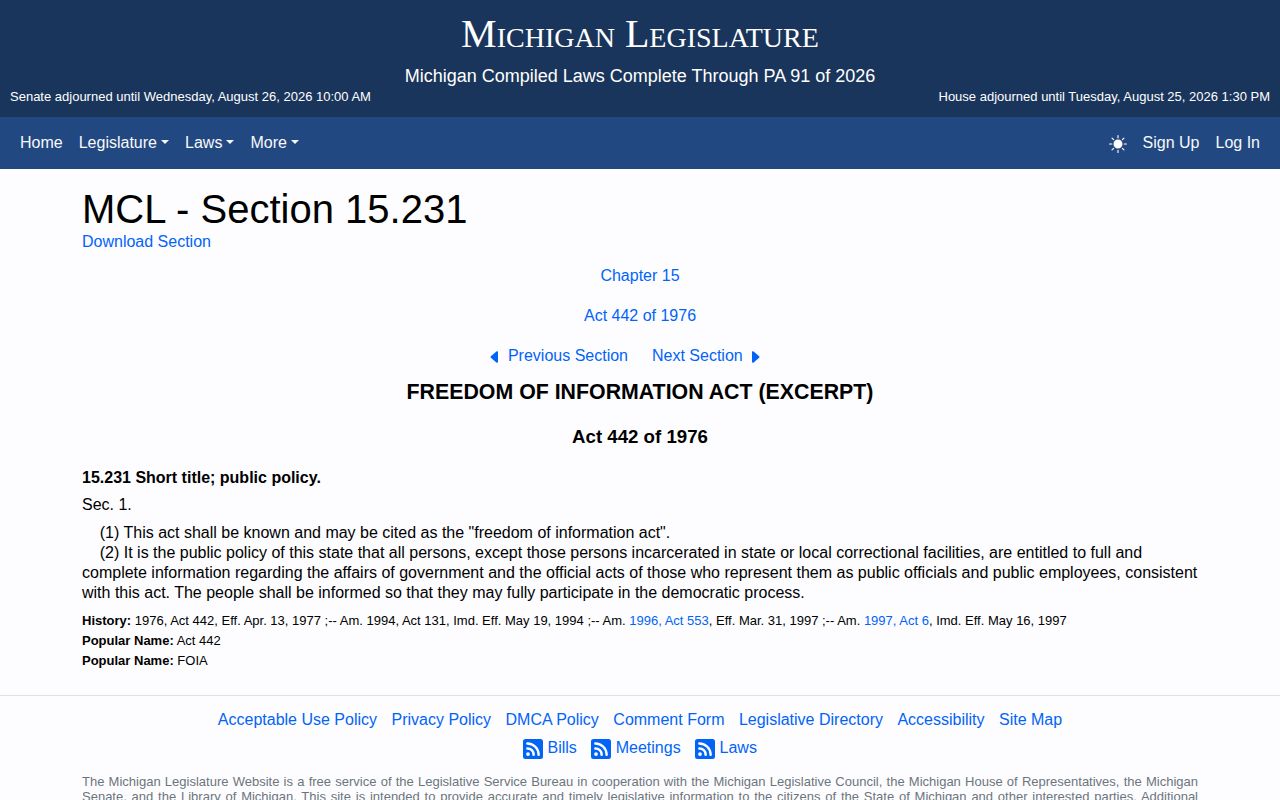
The statute opens the door. It does not settle every redaction, court restriction, or factual dispute tied to one booking file.
Busted in Livingston: Search Paths
Livingston County posts no current inmate roster. There is no same-day booking feed either. A productive search runs through official channels in sequence. Start with the county jail for a present custody question. From there, pin down the arresting agency, check the court register for what happened after booking, and file a targeted records request if you need the exact booking record or photo. Ignore the old, dead roster address and any look-alike domain. Neither is a live county source.
- Confirm the official Jail Inmate Information contact and call (517) 546-2445 about current county custody.
- Identify the arresting department, because a city agency may hold the incident report even when the jail held the person.
- Search MiCourt for an arraignment, case number, hearing, or disposition.
- Use county FOIA or the municipal records route for the particular nonexempt booking record or photo.
- Check MDOC, BOP, ICE, or USMS only when the custody label supports that separate system.
Keeping these records separate matters. A court event tells you nothing about jail custody today. A state-prison profile is not a recent county booking. And a release can clear local custody while the booking file lives on. If a name shows up in a local story, save the article date and agency name. Then confirm the details with the office that created the record. The county's Most Wanted Fugitives page lays out the court warrant-check route and safe verification steps on its own.
Livingston Mugshot Sources
Each official source below answers a different question. The order exists because the county's live roster is missing. Go to the Sheriff and jail first for local custody. The records office serves an exact file. The court gives you a case result. State and federal systems come into play only after someone has entered that separate custody stage. Local news and the lone historical third-party category can help you find a dated story. Neither stands in for an official record.
| Channel | Photo or record | Custody state and access |
|---|---|---|
| Livingston County Jail | Current custody contact, not a public photo roster | County intake or in-custody question by official phone. |
| County FOIA and Central Records | Possible nonexempt booking file or photo | Specific county record request and agency review. |
| MiCourt and clerks | Case, bond, hearing, and disposition | Post-booking court path, not a photo source. |
| MDOC OTIS | State identification photo where available | Sentenced prisoner or MDOC supervision, not ordinary jail intake. |
| BOP or ICE locator | Custody location, no county mugshot feed | Federal or immigration custody only. |
| Local reporting | Dated narrative and article images | Secondary coverage that must be checked with an agency or court. |
| Historical third-party category | Archive-like material through 2020 | Unofficial, stale-risk resource, never a current roster. |
The county's own source is the Sheriff press-release archive. It is event-driven, not a daily arrest log. Whole categories of bookings never appear there. For broader coverage, WHMI, Livingston Daily, The Livingston Post, Patch, MLive, and WILX all publish article-level reports on arrests and investigations. Keep the report date and photo description tied to the article itself. An editorial shot or a scene image is not a booking photo. Relabeling one only spreads confusion.
Note: An official press release can describe an arrest event without establishing a person's final charge, custody status, or conviction.
Busted Booking: Livingston Roster
The county's jail portal is an information page. It does not offer a searchable roster. There is no name field, no booking-number lookup, no results table, and no photo view. That gap shapes everything else here. Someone can be booked into the jail and never show up on any public webpage. A person released days ago may still have an internal record even though the custody question has closed. Instead of a roster, the county points readers toward jail information, bail, notification services, Central Records, and FOIA requests. Those routes answer specific questions, but none of them reproduces what a booking roster would show.
| Roster question | Livingston answer |
|---|---|
| Public name or booking-number search | Not located on the current official county site. |
| Public booking-photo display | No current official photo-results interface located. |
| Same-day or release-removal timing | Not published by the county. |
| Current custody confirmation | Call the jail at (517) 546-2445. |
| Historic booking file or photograph | Use a narrow county FOIA or custodian request. |
The county points to VINE for custody-status notifications. Sign up and it can tell you when someone is released or moved. That is all it does. VINE has no booking photos. It works nothing like a roster. LivCo Alert is another tool people confuse with a booking feed, but it is a general emergency system for the whole county. A phone app from the Sheriff showing every mugshot does not exist. An alert, a social media post, and a custody record each mean different things. Treat them separately.
Without a public roster to lean on, verification becomes a local job. The official jail page itself warns about fake lookalike domains posing as the real thing. Before trusting any site that claims a Livingston County busted roster, confirm the Michigan county domain. Call the published jail phone if anything looks off.
Livingston Recent Booking Feeds
No official feed covers the last day or two of bookings. Nothing weekly or multi-day exists either. The county publishes no date window, update time, field list, photo rule, or archive policy for a public feed. It publishes no rule for removing people after release either. The old roster web address no longer returns usable data, so treat any legacy link as dead weight rather than a shortcut. For a recent event, call the jail about current custody. Note which agency made the arrest. Check the court register. File a narrow FOIA request if you need the record itself. Press releases cover only the incidents the Sheriff chooses to highlight, such as investigations, crashes, and pursuits. Howell's monthly reports and Fowlerville's annual reports give aggregate numbers, not names. Brighton's department page and FOIA route do not build a city roster either.
Livingston County Sheriff press releases remain the one documented official alternative. Read them as dated stories about selected arrests, not as a tally of every booking.
Press releases can fill part of the gap. They name people booked recently and give a date. What they lack is a true arrest-log search with full booking fields, so the picture stays incomplete.
Livingston DOC Photo Searches
Michigan's state corrections agency runs its own lookup called OTIS. The full name is the Offender Tracking Information System. It tracks a different part of the system than the county jail: prisoners, parolees, probationers under MDOC watch, and some recent discharges. A profile there may show an ID photo. That picture belongs to the state's file. It is not the same as a Livingston County mugshot, and a plain local arrest will not show up there just because it happened here.
Start with the MDOC OTIS search. Then enter a name or an MDOC number. You can narrow results by sex, race, age, status, and identifying marks. The MDOC number wins when you have one. Coming up empty is common. A fresh Livingston arrest, a county-only case, an exempt record, or someone who never entered state supervision will all return nothing.
Think of MDOC OTIS as the state-custody tool. Turn to it once the county and court paths show that state supervision is the right label for the person you're tracing.
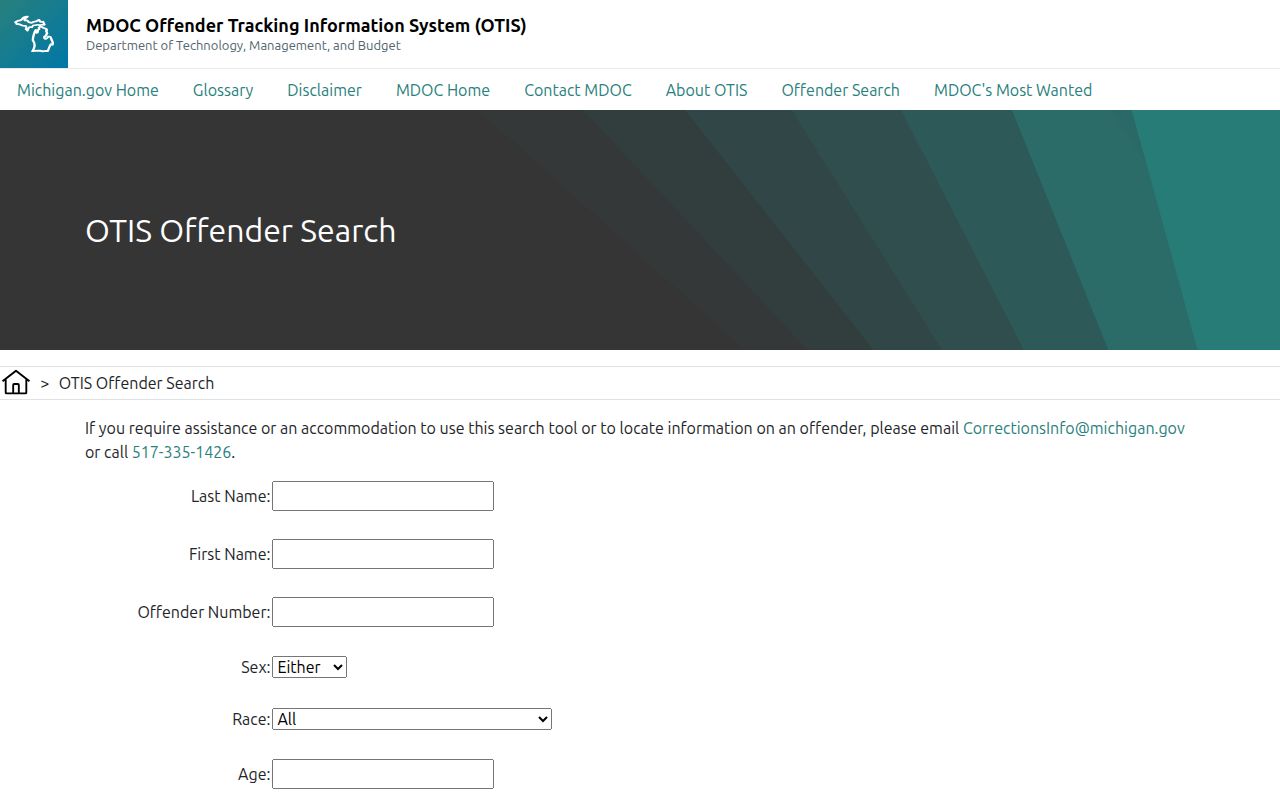
The MDOC lookup picks up the trail after someone moves into state custody. It does not stand in for the local jail phone line, a county FOIA request, or a court search for how a case ended.
Busted vs Released Records
Custody shifts fast. Yesterday's booking is not today's status. So keep three questions apart: is the person in jail right now, can I get an old booking record, and what did the court decide? Mixing them leads to bad conclusions. The table helps you pick the right official source for each one, and it clears up why a name shows in one system while another comes back empty. An old busted record, on its own, proves nothing about where someone sits at this moment.
| Status | Best next source | What it does not prove |
|---|---|---|
| Just booked or in county custody | Livingston County Jail phone and the responsible agency | That a public roster or photo must exist. |
| Released from county jail | FOIA for a historic record, then MiCourt for the case | That the charge was dismissed or resolved. |
| Sentenced or supervised by MDOC | OTIS and the relevant court record | That OTIS supplies the county booking image. |
| Federal or immigration custody | BOP, ICE, USMS, and the court as applicable | That a local booking is a federal conviction. |
One wrinkle is federal custody. Livingston County has housed USMS inmates, and reporting described a 2026 ICE WSO development, so custody can shift beyond the county. Neither fact gives you a local photo source. BOP offers no general public feed of booking photos. ICE's locator only tells you where someone is detained. Keep a county booking, a federal hold, and an immigration administrative warrant separate. Blend them and you end up with a claim no record supports.
Livingston Busted Court Follow-Up
A local booking usually lands in the 53rd District Court first. That court takes misdemeanors, traffic cases, and the early rounds of felony proceedings. Felonies that move ahead go to the 44th Circuit Court. For a statewide search, try MiCourt. Match carefully, though. Before tying a court entry to a jail record, confirm the court, the case number, and any identifiers, because a name alone can pair the wrong people.
Need to check on an active warrant? The District Court posts an open-warrants PDF, but check its displayed timestamp and call the court to confirm the list is current. A warrant list is not a jail-custody search. Court pages also warn of scam callers demanding payment over a claimed warrant. So rely on a published court number, MiCourt, or an attorney rather than any unsolicited payment link. The Crime News page shows how to trace a dated story from the narrative to the official court record.
Note: A court register can show the next hearing or final disposition, but it does not replace the jail's operational custody record.
Busted Mugshots in Livingston Cities
Howell, Brighton, and Fowlerville each run their own police departments. None offers a current individual booking-photo roster. What happens after a city arrest varies. It might end with a citation, a release, a transfer, or county-jail intake. When county detention follows, the Livingston County Jail and the county FOIA route are the practical path to custody details and booking files. The city department may also hold the incident report separately.
- Howell Busted Mugshots: Howell Police publishes aggregate monthly reports, while individual booking questions use the city or county records route.
- Brighton Busted Mugshots: Brighton Police has a FOIA path but no located public individual booking feed.
- Fowlerville Busted Mugshots: Fowlerville Police annual reports are aggregate, with a city FOIA path for municipal records.
Each city page keeps things in their lanes. The local department, its records route, county detention, and news coverage all play separate parts. A public story can describe an arrest. But the Sheriff, the city department, and the court stay the authoritative sources for the facts each one created.